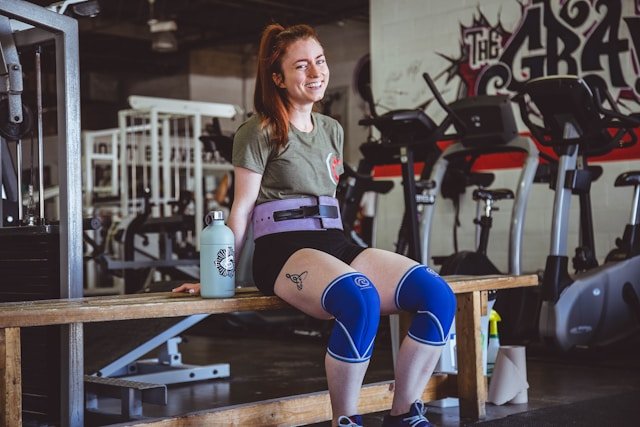
Gym Belts: When to Use Them and When to Avoid Them
Within the realm of strength training, opinions on equipment can vary greatly. One piece of gear that frequently generates discussion is the weightlifting belt. While some athletes consider them essential, strapping them on securely before each set, others argue that dependence on such aids can impede authentic physical progress. Before integrating a belt into your workout regimen, it’s crucial to grasp its function.
Understanding the Function of Gym Belts
Essentially, gym belts act as aids for stabilization. They elevate intra-abdominal pressure, which enhances spinal support and can lead to improved lifting performance as well as a reduced risk of injury when dealing with heavy weights. For individuals striving for personal records in exercises such as squats, deadlifts, or overhead lifts, this additional reinforcement can be significant. Nevertheless, gym belts are not miraculous solutions; they do not replace the need for strong core muscles or rectify bad lifting form. Instead, they serve as a specific tool for particular movements.
Optimal Scenarios for Belt Use
The use of a gym belt proves most advantageous during lifts that place substantial loads on the spine, especially when approaching maximal weights. Exercises like deep barbell squats and heavy deadlifts are prime examples. When lifters are tackling loads nearing 85-90% of their one-rep max, a belt can offer an extra level of security, allowing for lifting with enhanced confidence.
For those engaging in low-repetition lifting with high intensity, a belt acts as a valuable precautionary measure. It reinforces the core’s natural bracing ability, particularly important when fatigue starts to set in. Olympic lifters and powerlifters often incorporate belts into their training regimen for exactly this purpose.
When to Keep the Belt in Your Gym Bag
Not every exercise or lifter requires a belt. For individuals concentrating on building foundational core strength, reliance on a belt could be counterproductive. Movements such as goblet squats, lunges, kettlebell swings, or planks thrive on allowing the core to engage without assistance.
In cases where lifters operate with moderate weights, typically below 70% of their one-rep max, there is usually no necessity for a belt. Training without one in these weight categories encourages the core to stabilize naturally, fostering a balanced development and promoting long-term strength progression.
The Importance of Core Strength Without External Aids
Relying too heavily on gym belts may impede the development of the muscles that provide stability to your spine and pelvis. It is essential to prioritize cultivating strength in the transverse abdominis, obliques, and multifidus. These muscles collaborate to ensure stability, safeguard the spine, and produce power. Skipping the belt during warm-ups, auxiliary exercises, and core workouts aids in the thorough development of these crucial areas.
Best Practices for Using a Gym Belt
If you opt to use a belt, knowing how to wear it correctly is important. Position the belt around your waist, covering the section between your ribs and hips. It should fit snugly, but not to the point where deep breathing becomes difficult. The objective is to press your abdominal muscles against the belt to increase internal pressure through effective bracing and deep breaths, rather than tightening it to discomfort.
Common Pitfalls to Avoid
Using a belt for every set, especially with lighter weights, dilutes its effectiveness. It’s also a misconception that a belt can replace sound lifting techniques. Without a solid understanding of proper bracing mechanics, a belt can become more of a crutch than a tool to enhance performance.
Is a Gym Belt Right for You?
Think about your training objectives before deciding to incorporate a belt. If your primary focus is on maximal strength or powerlifting, the belt may become an invaluable asset for your most challenging lifts. Conversely, if you aim for athletic performance, mobility, or functional fitness, developing raw core strength is likely to be more beneficial.
Final Insights
Gym belts themselves aren’t inherently good or bad. Their effectiveness lies in how and when they are employed. Approach their use with informed intent and strategic application, and they can assist in achieving your training goals. However, it is vital not to let them replace strong, purposeful movement patterns.


You May Also Like

Benefits of Functional Fitness Training for Everyday Movement

The Impact of Mobile Subscriptions on Workout Culture