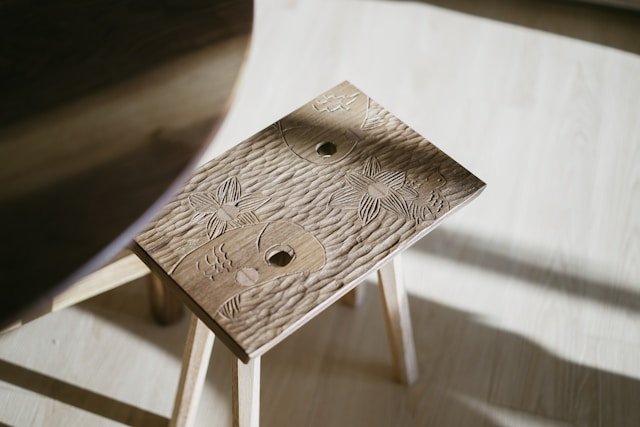
From Woodcuts to Etchings: The Artistic Heritage of Printmaking
The journey of printmaking reflects humanity’s relentless quest for creativity, innovation, and the expression of complex ideas. From primitive woodcuts to sophisticated etching methods, printmaking has not only advanced the realm of art but also facilitated the dissemination of thoughts and made art more accessible to diverse social classes and cultures. For centuries, this art form has evolved in tandem with technological advancements and shifting cultural trends.
If you possess prints adorning your walls, take a moment to appreciate them as we delve into the intricate history of printmaking, its journey to your living space, and how it transformed from an exclusive domain to a more inclusive one.
The Beginnings of Printmaking: Woodcuts
Your beloved prints trace their origins back to the woodcut technique. This method is among the earliest ways to reproduce images on paper and fabric. Dating back to the 9th century in East Asia, artisans carved images into wooden blocks, applied ink to the raised surfaces, and pressed the block onto a medium. This revolutionary practice allowed for the widespread sharing of new images, literature, art, and knowledge. By the 15th century, woodcutting had made its way to Europe, where it illustrated religious texts, adorned devotional materials, and provided visual content to households that may not have had the means to acquire original paintings.
The artistry of woodcutting cleverly melded sacred imagery with everyday life, fostering a shared cultural dialogue.
Advancing Techniques
As the quest for detail and nuance heightened, the printmaking landscape evolved, paving the way for innovative techniques that offered greater precision.
Engraving
During the 15th century, artists began to explore engraving. This method involved incising images into metal plates, typically copper, filling the carved lines with ink, and then applying the plate to paper. Unlike wood, metal allowed for intricate lines and the depiction of elaborate scenes, textures, and shading!
This medium was so well-received that it reached new heights during the Renaissance, a time when art and learning flourished together. Engravings showcased works of classical lore, religious imagery, and scientific diagrams, promoting a rich exchange of ideas throughout Europe.
Etching
Yet the evolution of printmaking didn’t stop there. The 16th century saw the innovative technique of etching emerge. This method employed acid rather than direct carving to produce images. Artists coated metal plates with a protective ground, etched designs through it, and let acid bite into the exposed sections. The outcome was a softer, more organic quality than engraving, capturing a sense of immediacy and spontaneity.
Many artists favored etching for its expressive potential, with masters like Rembrandt and Francisco Goya elevating the medium beyond mere replication to realms of fine art. This shift introduced tonal depth and dramatic contrast, permanently altering the printmaking landscape.
Cultural Impact: Printmaking’s Role in Society and Education
One of printmaking’s significant contributions was its role in democratizing art, making it accessible to a wider audience. The visual culture began to permeate the homes of tradespeople, artisans, and everyday families, no longer confined to the elite.
Furthermore, printmaking played a pivotal role in promoting literacy and education. As printing techniques developed during the Middle Ages, the advent of the printing press fundamentally transformed reading and learning opportunities across social strata. Illustrated books and prints became tools for education, enriching storytelling and making narratives more engaging—history, myths, and religious texts began to resonate deeply.
Contemporary Printmakers: The 20th Century and Beyond
In the modern age, artists such as Picasso, Matisse, and Warhol reimagined the boundaries of printmaking, experimenting with scale, color, and repetition. Their work underscored printmaking’s status as a hub of innovation, where traditional techniques merged with bold artistic visions.
Today, there is a renewed appreciation for historical printmaking methods. Many contemporary printmakers revive techniques such as woodcuts, engravings, and etchings, celebrating these tactile processes in an increasingly digital era. Simultaneously, digital artists are finding harmony by merging traditional methods with modern technologies, producing hybrid works that respect the past while embracing the present.
Ultimately, the legacy of printmaking is a profound narrative about the enduring connection among art, technology, and society.
Woodcuts, Engraving, Etching, Printing
Regardless of how you refer to it, printmaking is both an art form and a method of communication. It has enabled artists to transcend the confines of courts and churches, influencing culture through beauty and accessibility.
Every phase in the evolution of printmaking serves as a reminder that artistic innovation thrives on the quest to harmonize precision with personal expression and individuality. The process continues to bear witness to the notion that art, when multiplied, not only retains its essence but expands its reach, enriching both history and contemporary society.


You May Also Like

Essential Strategies for a Healthy, Clean Home

7 Effective Tips to Safeguard Your Head and Home from Hail